Hospitality Design Considerations for Brand Hotels
ramaker insights
Hospitality Design Considerations for Brand Hotels
Designing for a global hotel brand is a balancing act between creativity and consistency. Whether it’s the operational precision of Hilton, the lifestyle-driven energy of Marriott, the boutique-influenced sensibility of Hyatt, or the flexible, neighborhood-centric approach of IHG, each brand family brings its own design philosophy to the table. Understanding these nuances is essential for architects, designers, and developers who want to create spaces that not only meet brand standards but also elevate the guest experience.
Brand-Driven Design
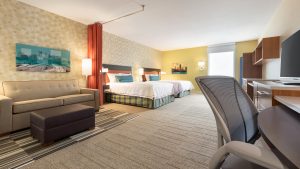
A guest suite at the Home2 Suites by Hilton in Roseville, MN.
Hilton: Design Rooted in Performance and Guest Flow
Hilton’s design philosophy is famously data driven. They focus heavily on scalability and operational excellence, making their design guidelines some of the most prescriptive in the industry.
Key Considerations
- Operational flow (back‑of‑house efficiency, known as Hilton’s “Heart of House” program is an important, global initiative of Hilton)
- Room standardization for predictable guest experience
- Tech‑forward features (Connected Room, digital key)
- Amenity optimization to reduce unnecessary costs
Design Signatures
- Embassy Suites’ atrium-centric layouts
- Tru by Hilton’s modular, youthful aesthetic
- Waldorf Astoria’s understated luxury
Check out Ramaker’s extensive portfolio of Hilton projects here.
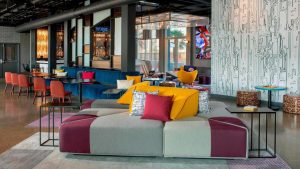
The lobby at the Aloft by Marriott in Waukee, IA, provides ample opportunities for relaxing and socializing.
Marriott: Experience‑Led Design Across a Massive Portfolio
Marriott’s 30+ brands range from Moxy to Ritz‑Carlton, and their design strategy is built around experience segmentation.
Key Considerations
- Clear brand personalities (e.g., Moxy = playful; Westin = wellness; Autograph = independent spirit)
- Strong zoning and programming in public spaces
- Lifestyle‑driven social lobbies (AC, Moxy, Aloft)
- Luxury emphasis on craftsmanship and locality
Design Signatures
- Westin’s biophilic design and “Heavenly” product suite
- Moxy’s bar-centric check-in
- Ritz‑Carlton’s residential luxury cues
Take a look at the Marriott projects Ramaker has completed here.
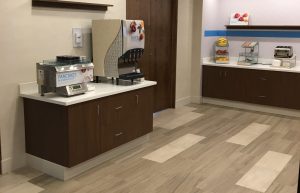
The breakfast bar at the Holiday Inn Express in East Peoria, IL, showcases IHG’s dedication to providing in-house food and beverage options to guests.
IHG: Design for Versatility and Local Expression
InterContinental Hotel Group (IHG)’s portfolio spans from Holiday Inn to Kimpton to Six Senses, and its design ethos tends to emphasize creative freedom, especially in lifestyle segments.
Key Considerations
- Flexible prototypes that allow owners to adapt to local markets
- Strong food and beverage identity in lifestyle brands (Kimpton, Hotel Indigo)
- Wellness-centric luxury (Six Senses, Regent)
- Efficiency and durability in midscale (Holiday Inn, Avid)
Design Signatures
- Indigo’s “neighborhood story” approach
- Kimpton’s boutique‑style eclecticism
- Holiday Inn’s open‑lobby concept
Ramaker’s portfolio of IHG projects can be found here.
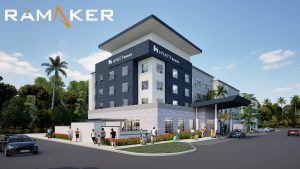
Hyatt House is an extended-stay brand designed to feel like home.
Hyatt: Human‑Centered, Boutique‑Influenced Design
Hyatt’s smaller portfolio allows for a more curated design philosophy, with a strong emphasis on guest psychology and sensory experience.
Key Considerations
- Well-being and emotional comfort (Hyatt’s “care” ethos)
- Lifestyle‑leaning aesthetics across many brands
- High design standards even in select‑service (Hyatt Place, Hyatt House)
- Independent-minded luxury (Andaz, Alila, Thompson)
Design Signatures
- Andaz’s art-driven local immersion
- Thompson’s urban‑boutique edge
- Park Hyatt’s minimalist luxury
Ramaker’s first Hyatt-branded hotel, the Hyatt House in Fort Myers, FL, is currently in development.
Cross-Brand Themes Shaping Modern Hospitality Design
Regardless of brand family, several trends dominate current design thinking:
Guest‑Facing Trends
- Blended work/leisure spaces
- Wellness integration (air quality, circadian lighting, fitness)
- Tech-enabled convenience
- Maintaining brand authenticity while incorporating a local influence into amenity aesthetics
Owner‑Facing Trends
- Modular construction
- Durable, sustainable materials
- Energy efficiency
- Flexible room configurations
As the hospitality industry continues to evolve, successful brand‑hotel design requires a partner who understands the nuances of architecture, engineering, and interior design across every major brand. With decades of experience delivering projects for IHG, Hilton, Marriott, and Hyatt, Ramaker brings a rare blend of technical expertise and creative insight that helps owners translate brand standards into memorable, high-performing guest experiences.
If you’re ready to elevate your next hotel project with a team that knows how to bring brand vision to life, connect with Ramaker and start shaping what’s possible!