Pool Evaluations for Outdoor Pools: Why Outdoor Aquatic Facilities Require a Different Approach
ramaker insights
Pool Evaluations for Outdoor Pools: Why Outdoor Aquatic Facilities Require a Different Approach
A comprehensive pool evaluation is one of the most valuable tools available to aquatic facility owners seeking to extend the life of their investment, improve guest experiences, and make informed capital planning decisions. While many of the core components assessed during a pool evaluation are similar across facility types, outdoor pools present a unique set of challenges that require special attention.
Weather, temperature fluctuations, UV exposure, precipitation, and seasonal operating cycles can accelerate deterioration, create hidden maintenance issues, and shorten the service life of critical infrastructure. Understanding how these factors affect a facility helps owners establish more accurate repair priorities and develop practical long-term improvement plans.
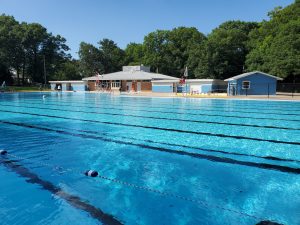
Outdoor Pools Age Differently
Outdoor aquatic facilities face conditions that indoor pools simply do not experience.
Throughout the year, outdoor pools are exposed to:
- Freeze-thaw cycles
- Snow and ice accumulation
- Heavy rainfall
- UV exposure
- Wind-driven debris
- Seasonal shutdowns and startups
- Wide temperature fluctuations
Over time, these forces can affect pool basins, decks, underground piping, mechanical equipment, waterslides, waterplay features, coatings, and other exposed components. Even a facility that appears to be functioning well may have underlying deficiencies that become evident only through a professional evaluation.
Because many outdoor pools operate for only part of the year, it can be tempting to assume they experience less wear. In reality, seasonal closures introduce their own stresses as facilities remain idle and exposed to harsh winter conditions. Startup and winterization procedures can also place additional demands on mechanical systems and buried infrastructure.
Evaluating Pool Shell and Structure
The pool shell is one of the most critical components assessed during an outdoor pool evaluation. Ground movement, freeze-thaw expansion, water infiltration, settlement, aging materials, and corrosion of reinforcing steel can all contribute to structural deterioration.
Small cracks may appear insignificant, but they can allow moisture and chlorides to reach reinforcing steel embedded within concrete. As the steel corrodes, it can expand, crack or spall the surrounding concrete, and lead to more extensive deterioration.
During an evaluation, aquatic consultants examine conditions such as visible cracking, settlement, surface distress, exposed or rust-stained reinforcement, and signs of movement. This review helps distinguish cosmetic defects from conditions that may require further investigation or repair. Because structural repairs can be among a facility’s most expensive improvements, early identification is especially important.
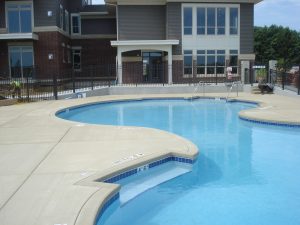
Assessing Pool Deck Conditions
Pool decks often display some of the most visible deterioration at outdoor facilities. Precipitation, freeze-thaw cycles, drainage deficiencies, direct sunlight, and winter conditions can lead to cracking, scaling, surface erosion, trip hazards, and ponding.
A thorough evaluation should consider more than the appearance of the deck surface. Drainage performance, joints, transitions, and underlying conditions can all influence how the deck performs over time. Poor drainage may accelerate deterioration, create safety concerns, and contribute to water damage elsewhere around the facility.
Identifying deficiencies early can give owners more options for phased repairs, potentially addressing localized concerns before complete deck replacement becomes necessary.
Don’t Overlook Underground Infrastructure
Some of the most expensive outdoor pool repairs involve infrastructure that cannot be readily seen. Circulation piping, drains, gutter systems, and related components may be vulnerable to age-related deterioration and freeze damage, yet problems can remain hidden until leaks, settlement, or declining system performance emerge.
An evaluation can help owners better understand the apparent condition and remaining service life of these systems. This information is particularly valuable because repairs may require excavation or removal of portions of the deck. Evaluating buried infrastructure before planning capital work can reduce the likelihood of completing a surface improvement only to disturb it later to access the systems below.
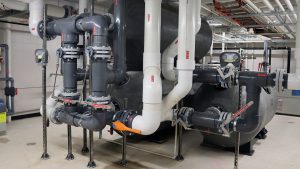
Mechanical Equipment
Mechanical systems work hard to keep water clean, safe, and comfortable for guests.
Key equipment evaluated may include:
- Pumps
- Filters
- Chemical treatment systems
- Valves
- Heating equipment
- Control systems
Reviewing equipment condition, performance, and expected service life helps facility owners anticipate needs before failures occur. Temperature swings, moisture exposure, seasonal startups, and winterization can accelerate wear. As equipment ages, operators may experience rising maintenance costs, declining performance, or reduced energy efficiency.
The findings of an evaluation can support informed decisions about whether equipment should remain in service, be repaired, or be planned for replacement as part of a future capital project.
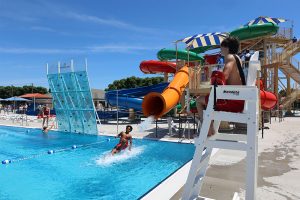
Special Considerations for Water Features and Slides
Many outdoor aquatic centers depend on waterslides, splash pads, and waterplay features to attract visitors and shape the guest experience. Because these amenities are continuously exposed to sunlight and weather, their condition is central to safety, reliability, and facility operations.
UV exposure and environmental conditions can degrade fiberglass finishes, coatings, sealants, plastics, and other exposed materials. Evaluations should also consider supports, connections, stairs, platforms, guardrails, water-delivery components, and safety systems for signs of deterioration or damage.
Annual evaluations, ideally completed well before opening day, can establish a consistent record of condition and identify emerging concerns before they disrupt the operating season. A recurring review also helps owners prioritize preventive maintenance, repairs, upgrades, and manufacturer follow-up for heavily used attractions that may change noticeably from one season to the next.
Using the Evaluation to Build a Capital Improvement Plan
The value of a pool evaluation extends beyond identifying deficiencies. A well-executed evaluation helps facility owners answer important questions:
- Which repairs are urgent?
- What components are nearing the end of their useful life?
- What improvements can be phased over time?
- How should future capital funds be allocated?
When findings are organized into a multi-year capital improvement plan, owners can rank priorities, anticipate infrastructure needs, and align projects with available funding. This approach supports strategic investment rather than reactive spending after an unexpected failure.
A capital plan can also help coordinate related work. If a pool deck will eventually need replacement, for example, the owner can consider the condition of the piping and other infrastructure below it before establishing the project scope. Looking at the facility as an interconnected system can help reduce avoidable rework and operational disruption.
Planning for Long-Term Success
Outdoor aquatic facilities face environmental and seasonal stresses that can affect safety, performance, and longevity. A comprehensive pool evaluation can reveal concealed deficiencies, establish repair priorities, and provide a realistic roadmap for future improvements.
By considering the pool structure and reinforcing steel, decks, buried infrastructure, mechanical systems, accessibility, waterslides, and waterplay features, facility owners can make informed decisions that protect their investment and support safe, reliable guest experiences for years to come. Regular evaluations also create a clearer record of how conditions are changing, helping owners move from short-term responses toward proactive facility planning.
Is your outdoor pool ready for another season? Ramaker’s aquatic engineering team provides comprehensive pool evaluations that help facility owners understand existing conditions, prioritize repairs, and plan strategically for the future. Contact us to learn how an aquatic facility evaluation can support your long-term goals.