Pool Evaluation: Assessing the Safety, Condition, and Future of Aquatic Facilities
ramaker insights
Pool Evaluation: Assessing the Safety, Condition, and Future of Aquatic Facilities
Public pools, aquatic centers, and natatoriums are valuable community assets—but they’re also complex. They may include aging systems that require regular evaluation to remain safe, functional, and financially sustainable. From structural integrity to mechanical systems and code compliance, a comprehensive pool evaluation provides owners with the clarity they need to plan responsibly for the future.
At Ramaker, pool evaluations are a critical first step in helping communities and organizations protect their investment, prioritize improvements, and make informed decisions about repairs, renovations, or replacement.
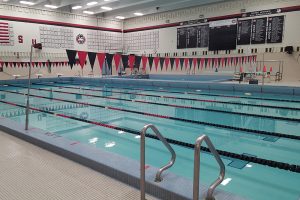
The revitalized pool at St. Cloud State University, where a detailed on-site evaluation was conducted to establish existing conditions, ensuring informed planning.
What Is a Pool Evaluation?
A pool evaluation is a systematic assessment of an aquatic facility’s physical condition, operational performance, safety, and compliance with current codes and standards. Unlike a routine inspection, a professional pool evaluation looks holistically at how all systems work together—and how they may perform in the years ahead.
Evaluations can be conducted for:
- Municipal pools and aquatic centers
- School and university natatoriums
- Community recreation centers
- Hotel and hospitality pools
- Aging or underperforming facilities
The result is a clear, actionable roadmap for extending facility life, reducing risk, and planning capital investments.
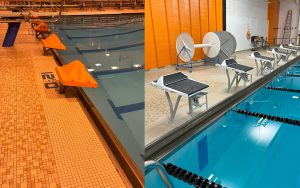
A before-and-after of the starting blocks at one of the pools involved in the Milwaukee Public Schools Pool Evaluation and Improvements.
Why Pool Evaluations Matter
- Safety and Risk Management
Aquatic facilities present unique safety challenges. Deteriorating structures, outdated equipment, or noncompliant drain systems can increase liability for owners and operators. A thorough evaluation can identify hazards early—before they lead to incidents or costly emergency repairs.
- Extending Facility Lifespan
Many pools last decades longer than expected with proactive maintenance and targeted upgrades. Understanding which components are nearing the end of their useful life allows owners to intervene strategically rather than reactively.
- Budget and Capital Planning
Pool evaluations help align technical needs with financial realities. By identifying short-, mid-, and long-term improvements, owners can:
- Prioritize spending
- Plan phased renovations
- Support grant or referendum efforts
- Avoid unexpected shutdowns
- Code Compliance and Modern Standards
Codes and health regulations evolve. Facilities built 20+ years ago may no longer meet today’s requirements for accessibility, safety, or efficiency. Evaluations highlight where updates are needed to remain compliant and competitive.
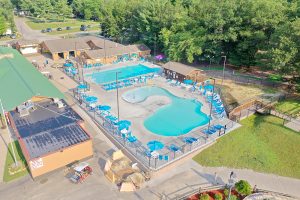
Land surveying was an essential part of the evaluation process for the replacement of three pools at Jellystone Park in Warrens, WI.
Key Components of a Comprehensive Pool Evaluation
Structural Systems Assessment
Engineers review pool shells, decks, gutters, bulkheads, and surrounding structures for signs of:
- Cracking or movement
- Water loss or leakage
- Material deterioration
- Long-term structural concerns
This assessment is especially important for older concrete pools and natatoriums.
Mechanical, Electrical, and Plumbing (MEP) Systems
Aquatic facilities rely heavily on MEP systems to function safely and efficiently. Evaluations typically examine:
- Filtration and circulation systems
- Pumps and piping
- Chemical treatment and disinfection systems
- Electrical systems and controls
- HVAC and dehumidification (for indoor pools)
Outdated or inefficient systems often represent the greatest opportunity for operational savings.
Safety Features and Code Compliance
A pool evaluation reviews compliance with applicable standards such as:
- Drain cover and entrapment prevention requirements
- ADA accessibility features
- Guarding, handrails, and depth markings
- Lighting and visibility
Recommendations help facilities meet current codes while improving the user experience.
Operational Performance and User Experience
Beyond technical systems, evaluations consider how the pool functions day-to-day:
- Is water quality consistent?
- Are maintenance demands excessive?
- Does the layout support modern programming?
- Are there recurring operational challenges?
These insights help owners understand not just what is failing, but why.
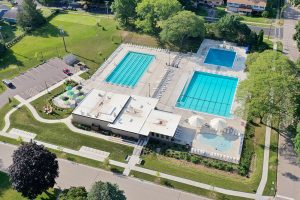
Ridgewood Pool has been a community gathering place for residents of Madison’s southwest side since 1958. They moved forward with a renovation when it became clear that the original structures had far outlived typical life expectancy.
When Should a Pool Evaluation Be Conducted?
A pool evaluation is especially valuable when:
- The facility is 20+ years old
- Major repairs are becoming more frequent
- A renovation or expansion is being considered
- The community is planning a referendum or capital campaign
- The pool no longer meets user expectations or demand
- Unexpected failures or closures have occurred
Regular evaluations can also be part of a long-term asset management strategy.
Why Work with an Aquatic Engineering Team?
Aquatic facilities are unlike any other building type. Partnering with a firm experienced in aquatic engineering and design ensures evaluations are accurate, practical, and grounded in real-world operational knowledge.
Ramaker’s integrated architecture and engineering team brings expertise in:
- Aquatic and pool engineering
- Structural, civil, and MEP systems
- Facility planning and design
- Public-sector and community-focused projects
This multidisciplinary approach allows us to see the full picture—technical, operational, and financial.
A pool evaluation is more than a condition check; it’s a strategic tool for protecting safety, extending facility life, and planning responsibly for the future. With Ramaker as your partner, that clarity carries through every phase—from initial evaluation and decision‑making to targeted repairs, renovations, or new construction—so you can move forward with confidence.
Interested in learning more about pool evaluations or aquatic facility planning? Reach out to Ramaker’s aquatic engineering team. We’re ready to help communities and facility owners assess their pools and plan for what’s next!